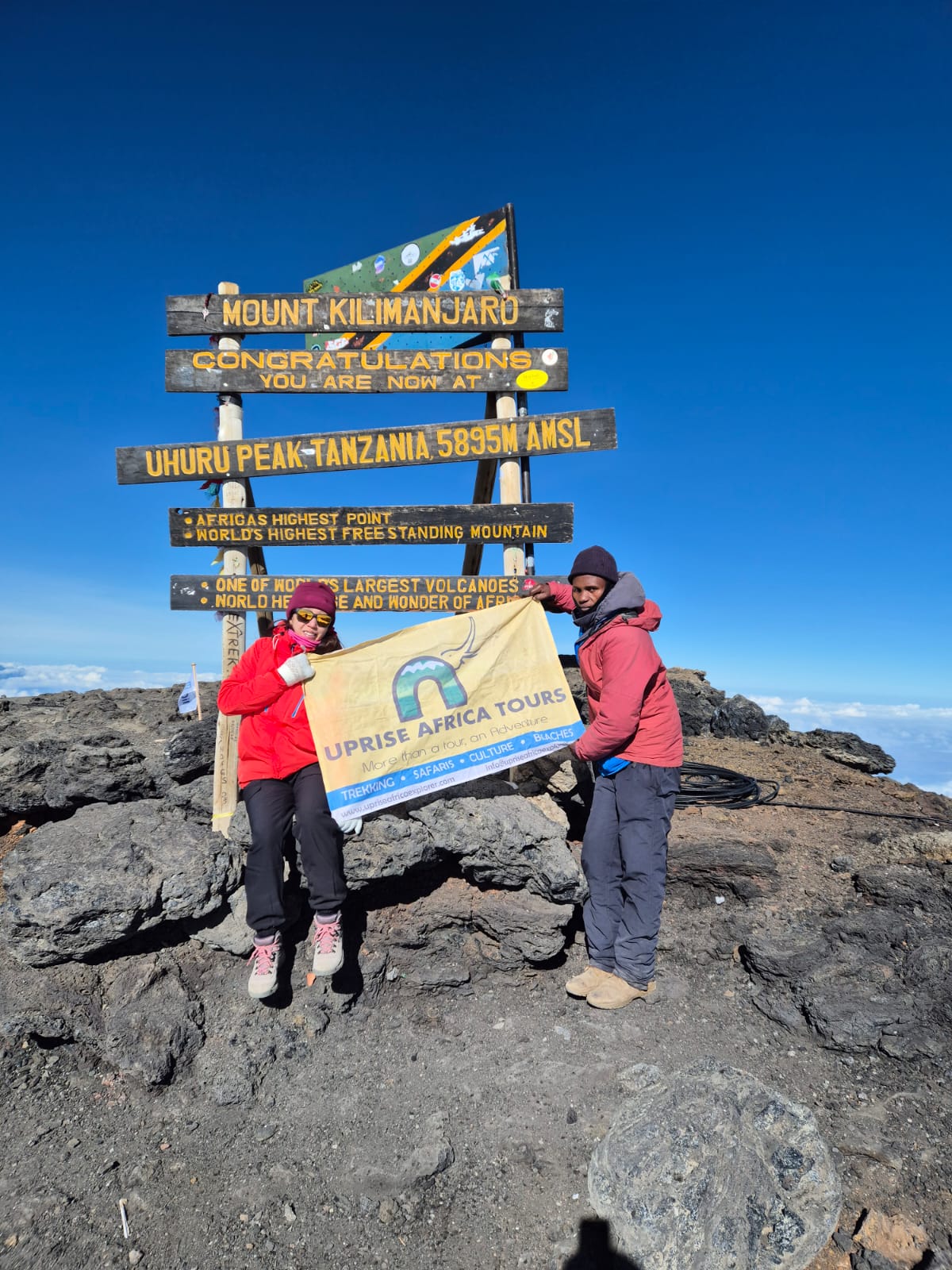
Kilimanjaro Summit Preparation Hydration and Clothing Tips for February Climbs
KILIMANJARO SUMMIT PREPARATION: HYDRATION AND CLOTHING TIPS FOR FEBRUARY CLIMBS
Climbing Mount Kilimanjaro in February is an excellent choice for many trekkers. The weather is generally stable, trails are quieter, and the mountain offers breathtaking views. However, summit night remains the most challenging part of the climb. Proper Kilimanjaro summit preparation is essential, especially when it comes to hydration and clothing choices.
At Uprise Africa Tours, we guide Kilimanjaro climbs year-round and see firsthand what works and what doesn’t on summit night. Many difficulties climbers face near the top are not about fitness but simple, avoidable issues like frozen water, dehydration, or incorrect layering.
This guide focuses on hydration strategies and clothing for Kilimanjaro summit night, with particular attention to January February Kilimanjaro conditions.
Understanding Kilimanjaro Summit Night Conditions
The summit push usually begins around midnight from high camp. This is when climbers face the coldest temperatures, strong winds, and reduced oxygen levels. Even during the dry season, Kilimanjaro February weather at altitude can be harsh.
Temperatures frequently drop well below freezing, and wind chill can make it feel much colder. These conditions increase the risk of dehydration, frozen water systems, and heat loss all of which impact energy and summit success.
Preparing specifically for summit night, rather than just the trek in general, is critical.
Hydration on Kilimanjaro Summit Night: Bladder, Bottle, or Both?
A common question is whether climbers should use a hydration bladder on Kilimanjaro or rely solely on bottles. Based on our experience, the best approach is to carry both.
A 2-litre hydration bladder is convenient and encourages regular sipping while walking. Maintaining steady hydration is critical at altitude, even when you don’t feel thirsty. However, during the Kilimanjaro summit night, hydration hoses are prone to freezing — even when insulated.
For this reason, every climber should also carry at least one 1-litre hard bottle as a backup. This redundancy is a simple but highly effective way to avoid hydration problems on summit day.
How Much Water for the Kilimanjaro Summit?
A common mistake is underestimating water needs in cold weather. While thirst is reduced, dehydration still happens quickly at altitude.
For the summit day, we recommend a total water capacity of 2.5 to 3 litres per person, typically:
2-litre hydration bladder
1 × 1-litre bottle
This provides enough water for the long ascent to Uhuru Peak and the descent back to high camp.
How to Stop Water Freezing on Kilimanjaro
A frequent concern is: does water freeze on Kilimanjaro? The answer is yes, especially on summit night.
Tips to prevent freezing:
Start the climb with warm water
Use an insulated hydration hose
Blow water back into the bladder after every sip
Keep bottles upside down, as ice forms at the top first
Store bottles in insulated sleeves, wrapped in socks, or inside your jacket
Many climbers rely only on a hydration bladder and are surprised when it freezes early. Having a bottle as backup ensures you can continue drinking even if the hose freezes.
Why Hydration Matters on Kilimanjaro
Staying hydrated is essential for:
Maintaining energy
Supporting acclimatization
Reducing headaches and fatigue
Improving comfort on summit day
Dehydration is one of the most common issues we see on Kilimanjaro winter climbs. Regular sipping, rather than large infrequent drinks, is the most effective strategy.
What to Wear on Kilimanjaro Summit Night
Choosing the right clothing for summit night is critical. Many climbers search for the best trousers for Kilimanjaro summit, hoping for one perfect pair. In reality, success comes from a layering system.
Recommended Kilimanjaro Layering System
Thermal base layer leggings (merino or synthetic) provide insulation and help regulate body temperature.
Softshell trousers breathable, wind-resistant, and flexible, perfect for active movement.
Hardshell over-trousers carried in your pack and added when wind increases, temperatures drop, or snow is present. Full-side zips are useful for summit night.
For climbers who feel the cold easily or during long stops near the summit, insulated over-trousers can be added for extra warmth.
Why Softshell Trousers Are Preferred
Softshell trousers are ideal because they:
Breathe better than insulated pants
Reduce overheating early in the climb
Block wind while allowing moisture to escape
Offer better mobility on steep sections
Overheating early on summit night is a common mistake. Starting slightly cool and adding layers later is far more effective.
Common Kilimanjaro Summit Night Mistakes
Based on years of guiding climbers, common errors include:
Relying only on a hydration bladder
Carrying too little water
Wearing trousers that are not windproof
Over-layering early and sweating excessively
Not planning specifically for freezing conditions
Avoiding these mistakes improves comfort and increases chances of a successful summit.
Kilimanjaro February Weather: What to Expect
February falls within Kilimanjaro’s dry season, offering clearer skies and stable conditions. However, Kilimanjaro February weather at altitude remains cold. Expect:
Freezing temperatures on summit night
Strong winds near the crater
Occasional snow or ice near the summit
Understanding January–February Kilimanjaro conditions and preparing accordingly is essential for a safe climb.
Final Thoughts: Smart Preparation for a Successful Summit
Proper Mount Kilimanjaro summit preparation is about smart systems rather than heavy gear. Carrying the right amount of water, planning for freezing conditions, and using an effective layering system can make the difference between a difficult summit night and an enjoyable one.
At Uprise Africa Tours, we focus on practical, experience-based advice that works on Kilimanjaro in real conditions. If you are planning a guided Kilimanjaro climb and want support from a local Kilimanjaro tour operator, our team is here to help.
Frequently Asked Questions About Kilimanjaro Summit Night
Does water freeze on Kilimanjaro summit night?
Yes. Water frequently freezes above 4,700 metres, especially during January and February climbs.
Can I use a hydration bladder on Kilimanjaro?
Yes, but it should always be backed up with a hard bottle.
How cold is Kilimanjaro summit night?
Temperatures can drop well below freezing, with wind chill making it feel much colder.
What trousers are best for Kilimanjaro summit night?
A combination of thermal base leggings, softshell trousers, and hardshell over-trousers works best.
Tags: