Where Is Mount Kilimanjaro? Complete Location Guide | Uprise Africa Tours
Where Is Mount Kilimanjaro? Complete Location Guide | Uprise Africa Tours
Mount Kilimanjaro is one of the most iconic mountains in the world, attracting adventurers, trekkers, and nature enthusiasts from all over the globe. But where exactly is Kilimanjaro located, and why is its location so important for climbers? At Uprise Africa Tours, we guide travelers from the base to the summit, so understanding the mountain’s geography is key to planning a safe and successful trek.
In this guide, we cover everything you need to know about Mount Kilimanjaro’s location, including the surrounding region, nearby towns, airports, climate zones, and trekking tips — all based on our years of experience leading tours.
Mount Kilimanjaro: The Basics
Mount Kilimanjaro is located in northeastern Tanzania, in the Kilimanjaro Region. Although it is close to the Kenya border, the mountain lies entirely within Tanzania. Its coordinates are approximately 3° S latitude and 37° E longitude, placing it very near the equator.
Kilimanjaro rises to 5,895 meters (19,340 feet) above sea level, making it Africa’s tallest mountain and the world’s highest free-standing mountain. The base is tropical and lush, while the summit is covered in snow and ice year-round. This dramatic elevation change is what makes planning your gear and clothing so important.
Nearby Towns and Access Points
Moshi – The Main Gateway
Most climbers begin their journey from Moshi, a small town at the southern base of Kilimanjaro. Moshi offers accommodations for acclimatization, gear rental shops, and restaurants to prepare for the trek. Uprise Africa Tours always recommends spending at least one night in Moshi to adjust to the altitude and get ready for your climb.
Kilimanjaro International Airport (JRO)
For international travelers, Kilimanjaro International Airport is the main entry point. From the airport, Moshi is just a 45–60 minute drive, making it convenient to reach the base of the mountain without long overland travel.
Climate Zones of Kilimanjaro
Kilimanjaro’s location near the equator creates a range of climate zones, each requiring different preparation:
Rainforest Zone (800–1,800 meters): Lush, humid, and rainy with dense vegetation and waterfalls. Waterproof jackets and breathable layers are essential.
Heath and Moorland Zone (1,800–3,200 meters): Cooler temperatures with shrubs and small trees. Less vegetation than the rainforest.
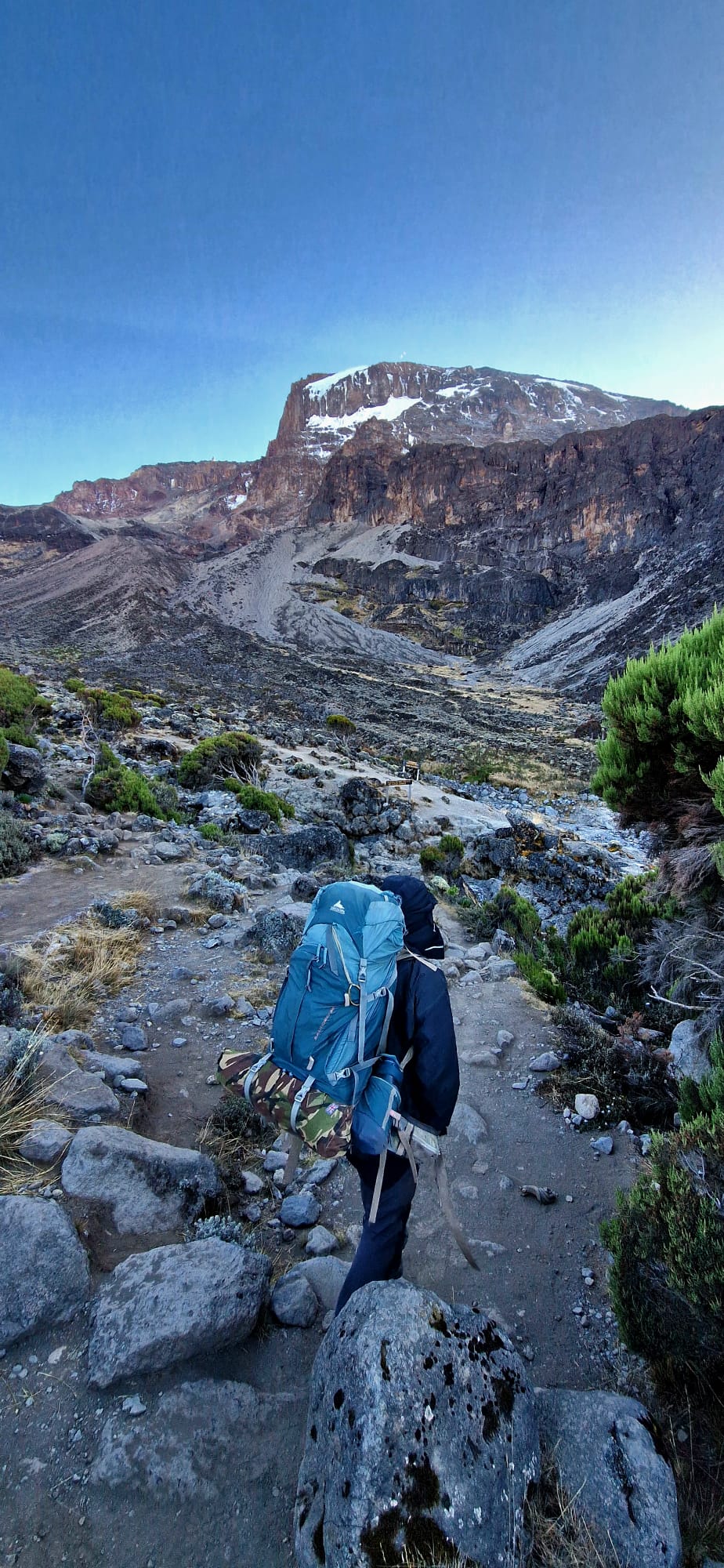
Alpine Desert Zone (3,200–4,500 meters): Dry, rocky terrain with extreme temperature swings. Pack layers for sun protection during the day and warmth at night.
Arctic Zone (4,500–5,895 meters): Snow and ice near the summit. Minimalist, lightweight backpacks with easy-access summit essentials are recommended.
Understanding these zones is crucial for planning your trek, gear, and acclimatization strategy. Uprise Africa Tours always coaches climbers on how to pack efficiently for each zone to maximize safety and comfort.
Why Kilimanjaro’s Location Matters
Kilimanjaro’s position in northeastern Tanzania makes it:
Easily accessible via major airports and roads
Safe for trekking, with well-established national parks
Geographically unique as the tallest free-standing mountain in the world
The combination of proximity to the equator and extreme elevation creates dramatic climate differences along the ascent. Climbers experience tropical forests, dry alpine deserts, and icy peaks all in one climb, making Kilimanjaro a unique adventure.
Tips for Travelers
Fly into Kilimanjaro International Airport (JRO) for convenient access.
Stay in Moshi to acclimatize before the climb.
Pack for multiple climate zones — lightweight clothing for the base and insulating layers for the summit.
Use a proper daypack to carry essentials in each climbing zone.
Follow altitude precautions: stay hydrated, pace yourself, and follow your guide’s instructions.
At Uprise Africa Tours, we emphasize the importance of understanding Kilimanjaro’s location and climate to make the climb safe, efficient, and enjoyable.
FAQs About Kilimanjaro’s Location
Q: Where is Mount Kilimanjaro located?
A: Mount Kilimanjaro is in northeastern Tanzania, near the Kenya border but entirely within Tanzania.
Q: How tall is Mount Kilimanjaro?
A: Kilimanjaro stands at 5,895 meters (19,340 feet) above sea level, making it Africa’s tallest mountain.
Q: What is the nearest town to Kilimanjaro?
A: Moshi, on the southern slopes, is the main starting point for climbers.
Q: What is the nearest airport to Kilimanjaro?
A: Kilimanjaro International Airport (JRO), approximately a 45–60 minute drive to Moshi.
Q: What climate zones are on Kilimanjaro?
A: There are four zones: rainforest, heath/moorland, alpine desert, and arctic/summit ice.
Final Thoughts
Understanding where Mount Kilimanjaro is located and its surrounding geography is essential for every trekker. Its location in northeastern Tanzania, combined with its unique elevation and climate zones, creates one of the most memorable and challenging treks in the world.
With proper planning, gear, and guidance from Uprise Africa Tours, climbers can enjoy a safe, unforgettable journey from tropical rainforest to icy summit fully prepared for every stage of Africa’s highest mountain.
Tags: